
RAL Space camera systems packing a PUNCH
RAL Space has played an important role in the science and technology behind NASA’s Polarimeter to Unify the Corona and Heliosphere (PUNCH) mission.
Challenge
While space weather is usually harmless – producing the beautiful displays of the Northern and Southern Lights – severe solar storms can interfere with aspects of everyday life including GPS systems, power grids, and vital global communications on Earth. It is critical that scientists continue to develop understanding of solar phenomena so we can enhance our resilience to their potential impacts.
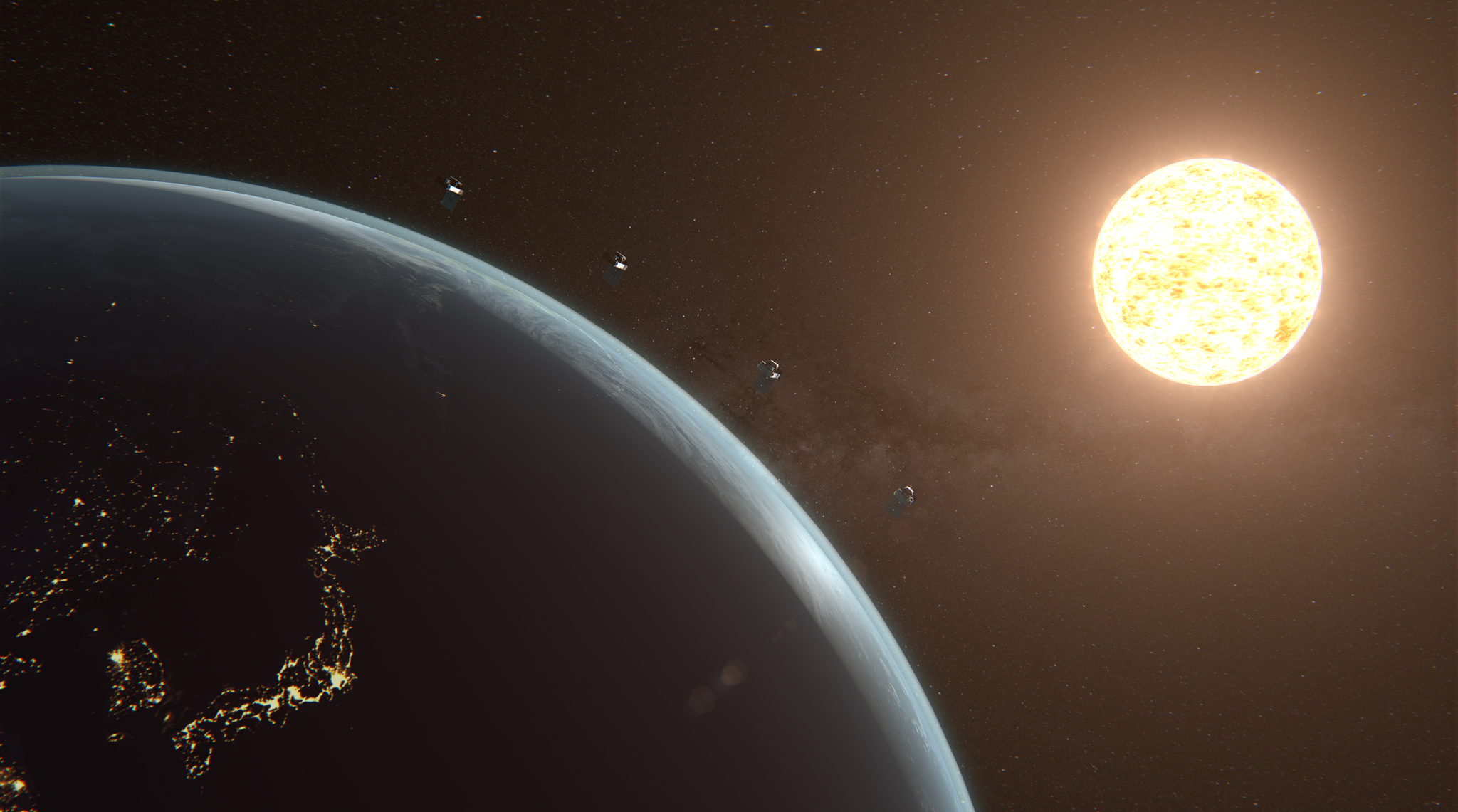
Artist’s impression of the four PUNCH spacecraft in orbit. Credit: NASA
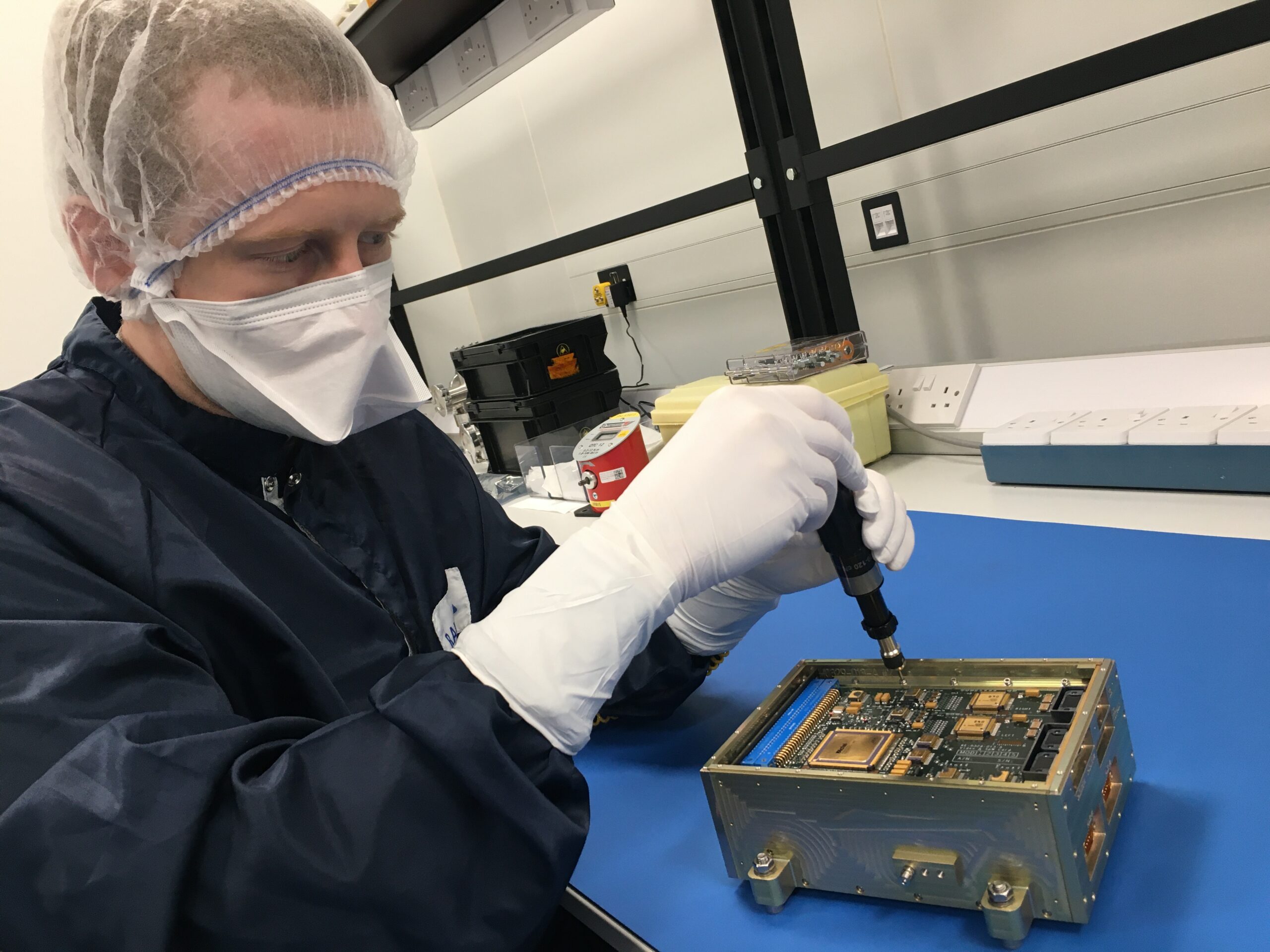
PUNCH’s engineering model on the bench at RAL Space | Credit: STFC RAL Space
Approach
NASA’s PUNCH mission (Polarimeter to Unify the Corona and Heliosphere) does exactly that, using four spacecraft working in unison to capture an unprecedented view of the inner solar system. All four launched in March 2025 and are already delivering valuable data.
RAL Space’s contribution was central to the mission’s imaging capability. Teams designed, developed, and manufactured the camera systems for all four PUNCH spacecraft – visible-light cameras now capturing a unique, evolving picture of the solar wind from orbit. RAL Space scientists also led the mission’s in-flight calibration, drawing on expertise from NASA’s earlier STEREO solar mission and working closely with mission leads at the Southwest Research Institute (SwRI). Precise calibration is essential to ensure the four spacecraft function as a single seamless “virtual instrument,” producing the highest quality data throughout the mission.
Benefits
PUNCH is already delivering valuable insights to scientists worldwide. As Dr Jackie Davies, Heliospheric Physics Programme Lead at RAL Space and UK Science Lead for PUNCH, said: ““It’s incredibly exciting to see PUNCH in orbit. The camera systems we’ve developed are providing an innovative view of the solar wind, helping scientists understand how space weather forms and evolves. This research is vital for protecting technology and infrastructure on Earth.”
The mission represents a landmark moment for RAL Space’s long-standing expertise in space imaging, and an important step in our ability to forecast and prepare for extreme space weather.
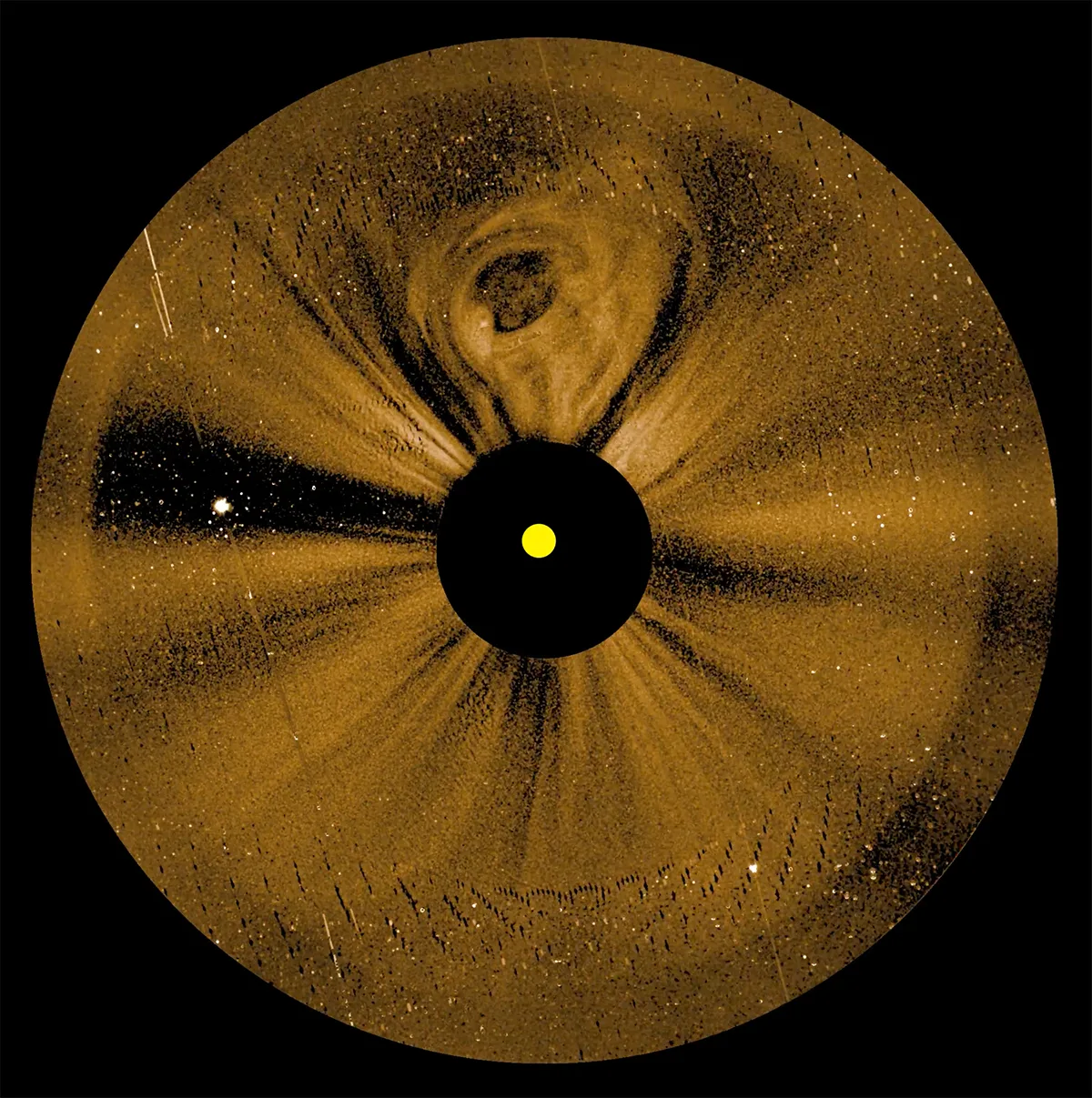
The Narrow Field Imager camera on one of the four spacecraft of NASA’s PUNCH mission, imaged a large coronal mass ejection on 3 June 2025. The coronal mass ejection can be seen rising in the centre of the image, above the blocked-out Sun. Credit: NASA/SwRI