
Q-Band Breakthrough: Faster Satellite Communications for a Connected World
RAL Space have supported the demonstration of a new band of satellite communications, paving the way for much faster data transfer rates that could connect remote communities and support emergency response systems.
Challenge
Streaming, digital services, and the rapid growth of Low Earth Orbit (LEO) satellite constellations are pushing traditional communications frequency bands to their limits. To meet surging global data demands, the industry needs to unlock higher frequency bands, but doing so requires demonstrating that stable, high-quality links with LEO satellites are technically achievable.
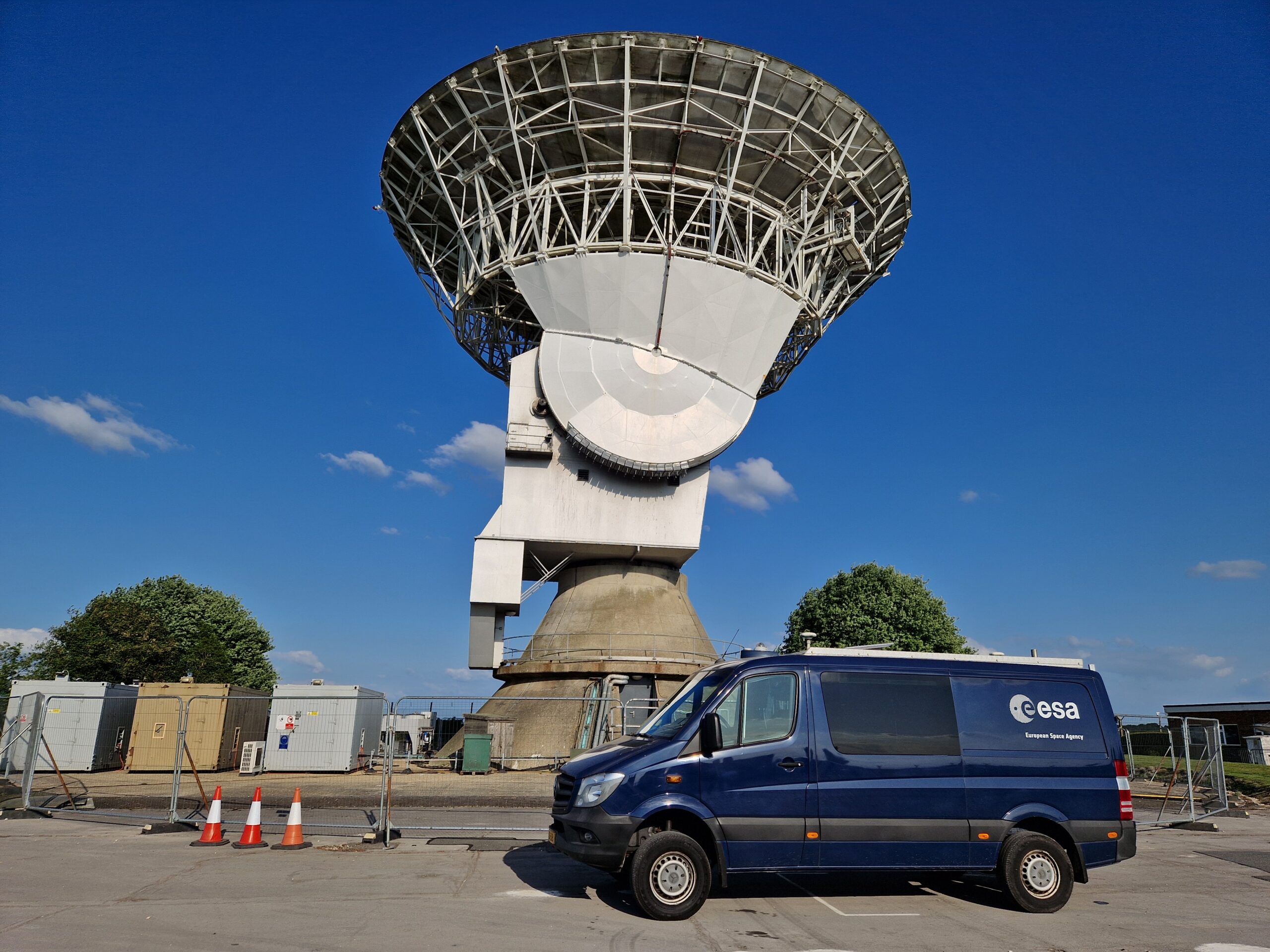
ESA’s mobile 5G laboratory in front of Chilbolton’s 25m antenna. Credit: ESA
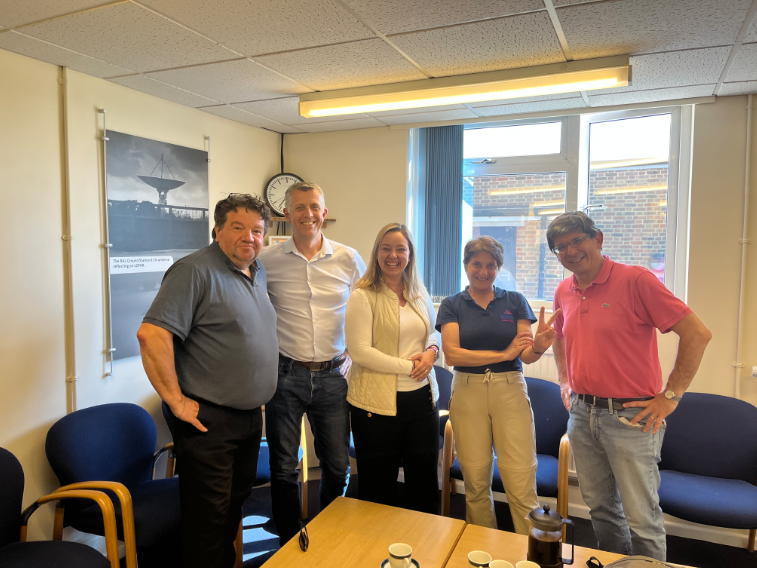
Teams from RAL Space, Telesat and ESA, at the Chilbolton Observatory. Credit: ESA
Approach
In a significant first, the European Space Agency (ESA), Telesat, and RAL Space successfully established a Q-band communications link with a Telesat LEO 3 satellite passing overhead. The link was made using a specially developed Q-band receiver mounted on Chilbolton Observatory’s 25-metre antenna – drawing on decades of radio frequency and signal propagation expertise that the site has built since the 1980s.
The project was carried out under a Memorandum of Understanding between Telesat and ESA, funded as an ARTES Advanced Technology activity with support from the UK Space Agency.
Benefits
The successful demonstration of these higher frequencies (38-39 GHz) is a milestone for next-generation satellite communications, paving the way for much faster data transfer rates that could connect remote communities, support emergency response systems, and unlock new possibilities across the digital economy.
Antonio Franchi, ESA’s Head of Space for 5G/6G and Sustainable Connectivity, said: “We are proud to see our collaboration with Telesat – and now RAL Space – continue to grow, unlocking new opportunities through higher frequency communications. This highlights how our Member States are driving innovation to meet both market needs and societal challenges.”
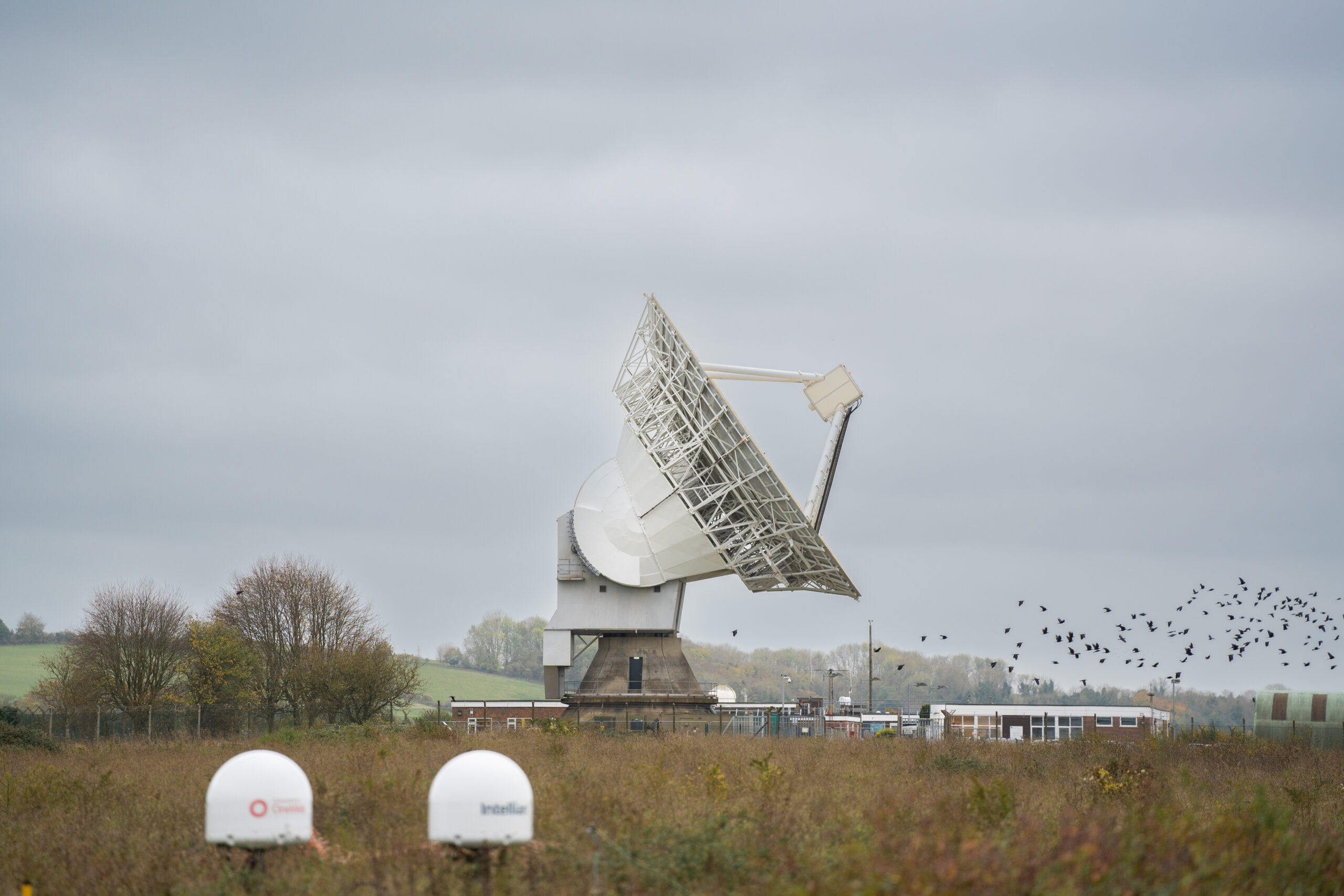
The 25m dish at Chilbolton Observatory. Credit: NCAS