
Chilbolton Observatory: Supporting UK space domain awareness
Chilbolton Observatory strengthens the UK’s space domain awareness capabilities by providing high-precision tracking data directly to the National Space Operations Centre.
Challenge
Since 1957, over 6,300 rocket launches have placed nearly 15,000 satellites into orbit. Today around 10,000 remain active alongside an estimated 32,000 tracked objects larger than 10cm in low-Earth orbit – creating growing collision and re-entry risks for satellites, infrastructure, and people on the ground.
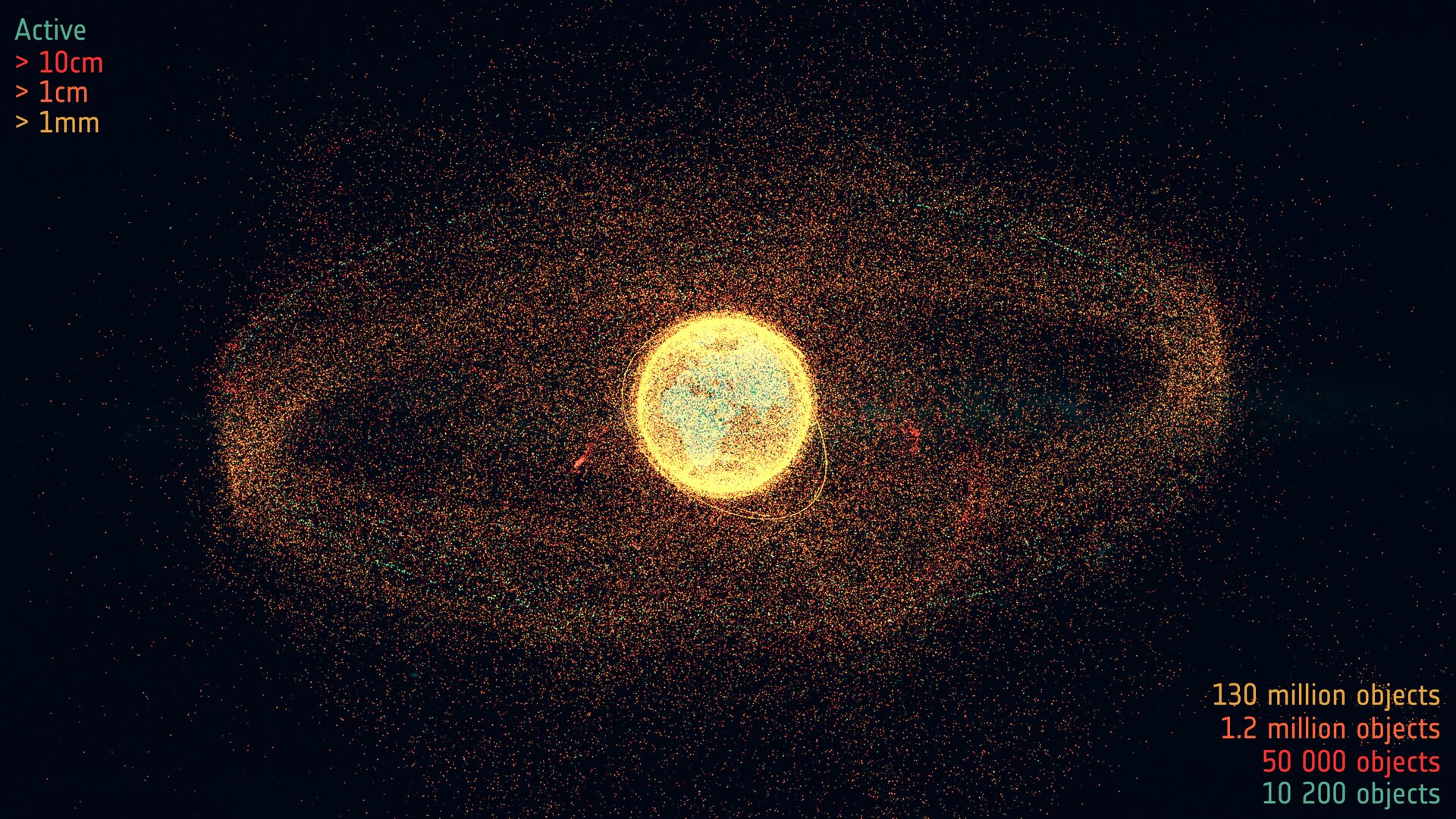
A colour-coded representation of debris showing the number of objects of various sizes as well as active satellites that are modelled to be circling Earth in August 2024. Credit: ESA
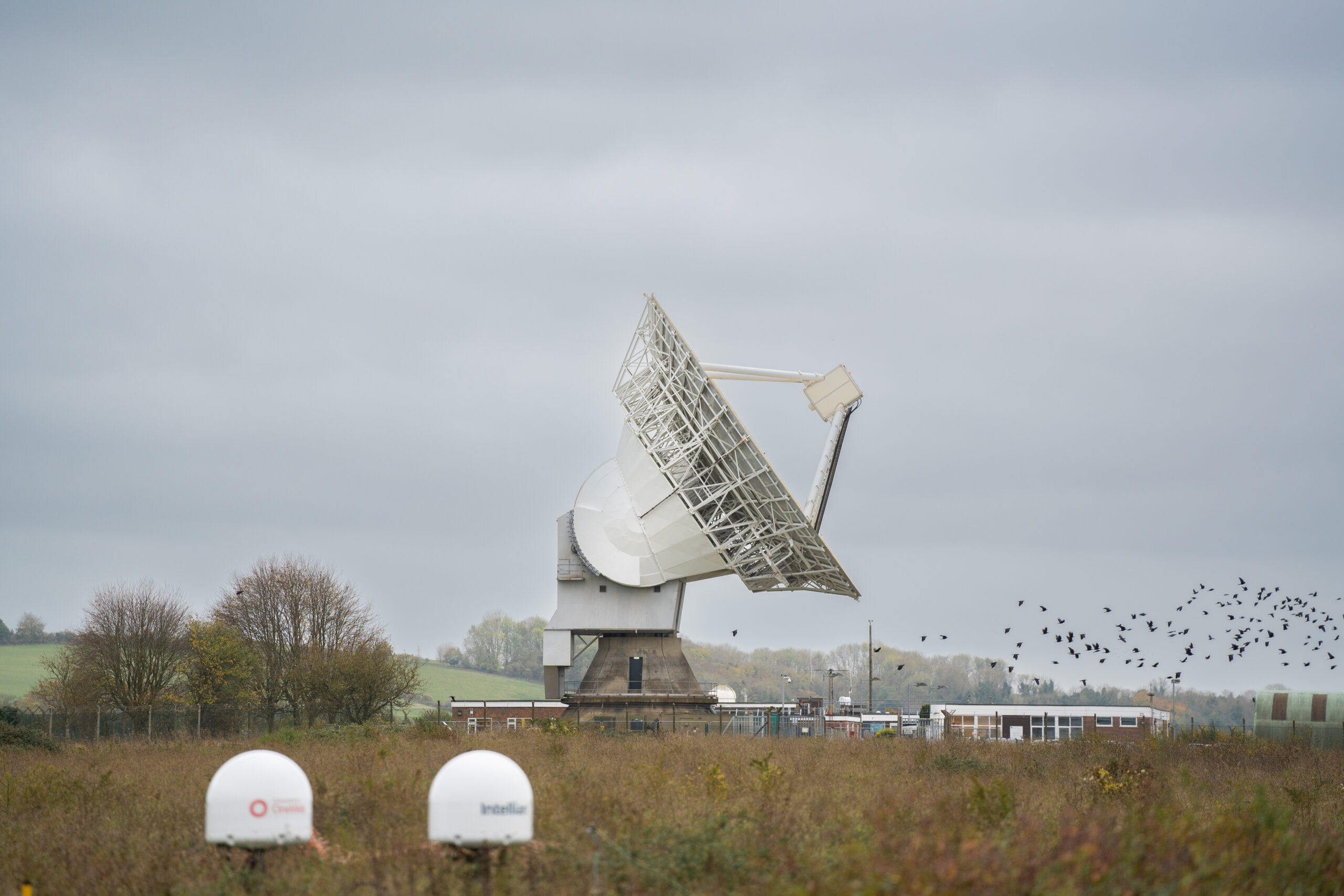
The 25m dish at Chilbolton Observatory. Credit: NCAS
Approach
Launched in May 2024, the National Space Operations Centre (NSpOC) brings together advanced space domain awareness capabilities to protect UK interests in space and on Earth. Led by the UK Space Agency and UK Space Command in partnership with the Met Office, NSpOC uses a global sensor network to monitor orbital debris and prevent potentially catastrophic collisions. RAL Space’s Chilbolton Observatory provides high-precision radar and optical tracking data directly to NSpOC, enabling real-time monitoring of satellite movements and debris.
Benefits
NSpOC operates around the clock, issuing over 3,000 collision warnings to satellite operators every month. Chilbolton’s high-resolution tracking capabilities support this effort, with more precise characterisation capabilities under development to further strengthen the UK’s space domain awareness and protect national space assets for years to come.