
Investigating the impacts of COVID-19 lockdowns on global emissions
The Centre for Environmental Data Analysis (CEDA), in support of its National Centre for Earth Observation (NCEO) activities, has provided data to scientists on how COVID-19 lockdowns affected the levels of air pollution in countries around the world.
Challenge
NCEO researchers needed past and present data showing air quality across multiple countries, so that relevant comparisons could be made from before and during the coronavirus pandemic.
At the time, the CEDA Archive held over 10 Petabytes of satellite data from ESA’s Sentinel missions, an amount increasing by over seven Terabytes per day. This volume of data can be difficult for researchers to access easily, especially when older data is required.
Approach
The team at CEDA makes use of different storage methods to ensure that data is held in the most cost-effective and user-friendly way. Fast disk holds the latest data, so users have instant access, whereas older data, which tends to have much lower demand, is stored on tape as a cheaper storage solution.
When the NCEO request came in, CEDA were able to download and store the near real time data in a readily accessible storage for a longer period than usual. They were also able to provide tools so that users can retrieve older data from tape to be used interactively on the JASMIN supercomputer for their research.
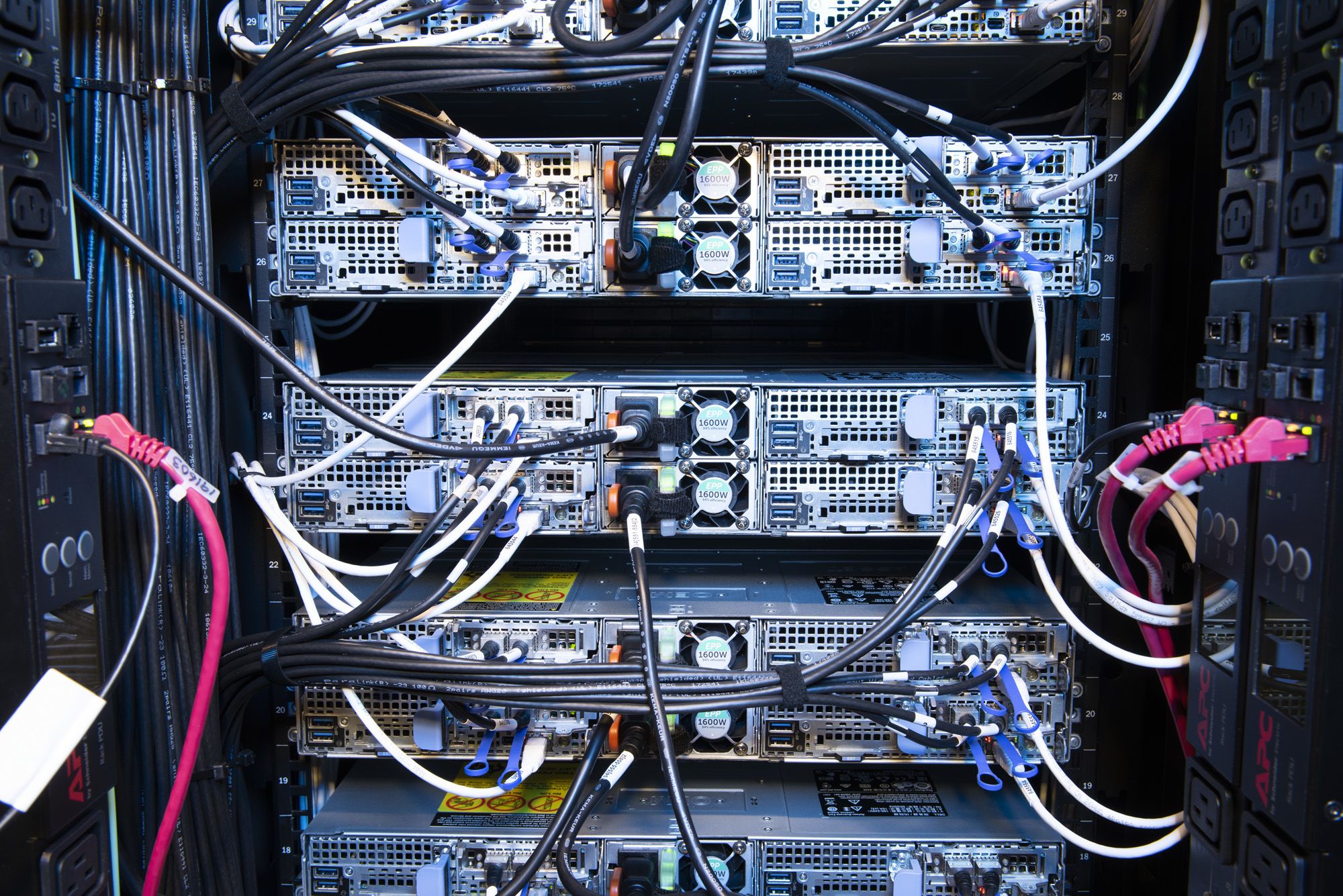
Back of the JASMIN data intensive supercomputer. Credit: STFC RAL Space
Benefits
CEDA responded to community needs by updating and backfilling many of the relevant data. Researchers investigating air pollutants during the coronavirus pandemic were able to easily access relevant Sentinel-5P data products and quickly infer the improved air quality resulting from COVID lockdowns, demonstrating reduced emissions.
The CEDA team continue to build on experience such as this to ensure that important data products are archived in the most efficient way.