
Quantum technology for space weather
Quantum technology is monitoring the impacts of space weather, supporting better prediction to protect infrastructure on the ground.
Challenge
Solar storms can disrupt power grids, GPS receivers, and railway signals – yet the UK’s three existing geomagnetic observatories leave significant gaps in national coverage, making it impossible to study the regional variations in Earth’s magnetic field that occur during extreme space weather events. Better monitoring is essential for protecting critical infrastructure and giving society the information it needs to respond.
Approach
A new generation of quantum magnetometers has been deployed across the UK to fill those gaps, including a sensor based at RAL Space’s Chilbolton Observatory. Developed and optimised by the University of Strathclyde and RAL Space, with funding from UK Research and Innovation and the UK Space Agency, these sensors can detect changes in the magnetic field 100 times smaller than standard instruments, at faster rates, and with greater accuracy.
The five sensors will generate high-resolution data to support the British Geological Survey (BGS) in monitoring and understanding the impact of extreme magnetic storms across different parts of the country, capturing the small-scale, localised variations that existing observatories can’t detect.
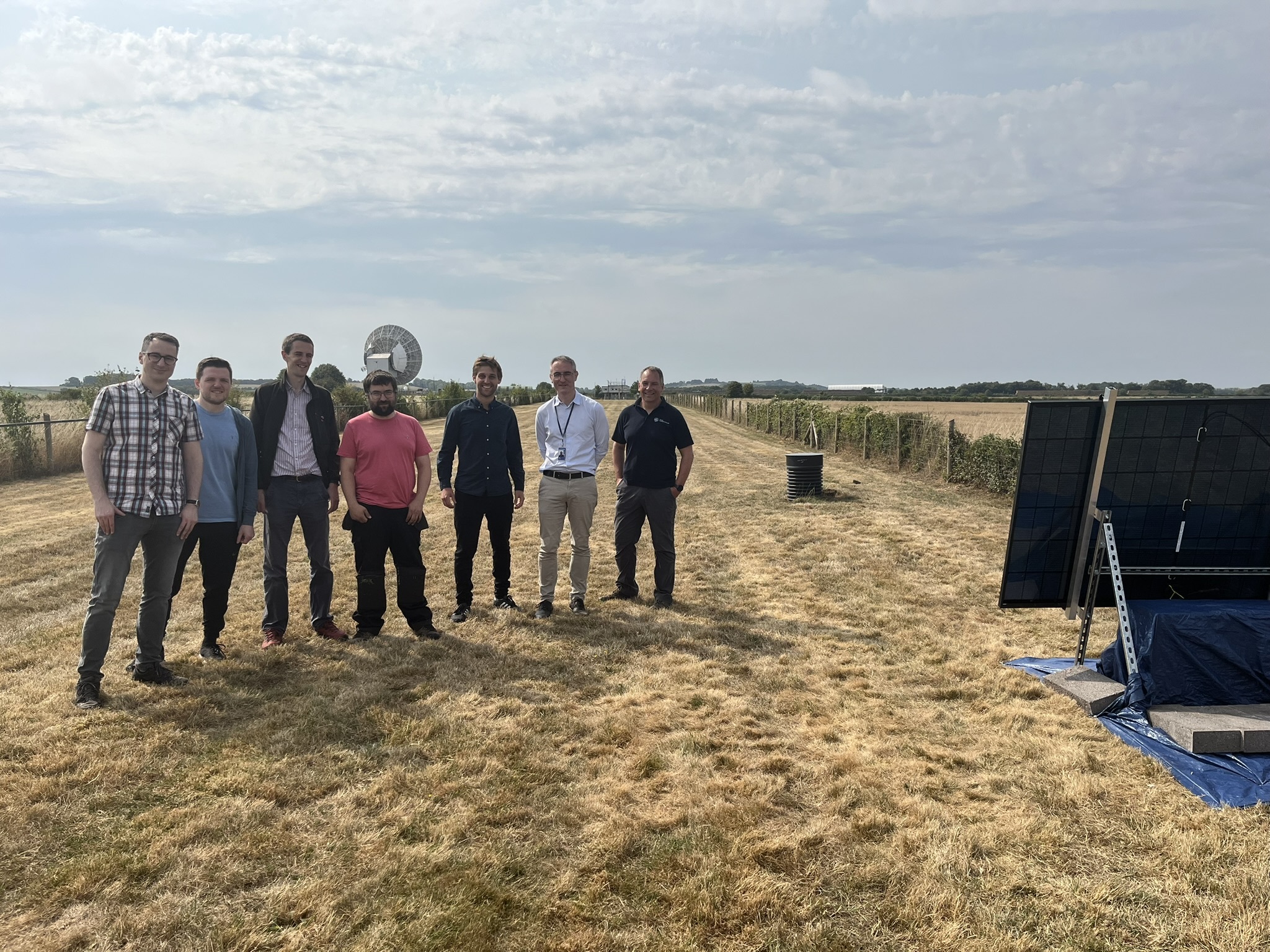
Project members at the installation of new quantum magnetometer sensor at RAL Space’s Chilbolton Observatory, Hampshire. Credit: BGS / UKRI.
Benefits
The deployment marks a step change in the UK’s space weather monitoring capability. As Dr Ciarán Beggan, geophysicist at BGS, explained: “ The installation of the five new quantum magnetometers will help to fill in the gaps between the existing observatories and will improve our vision of the changes taking place during extreme magnetic storms. These new measurements will greatly enhance our understanding of how extreme magnetic storms impact different parts of the country. This means that society in general will have access to the advice and information needed to understand where we are vulnerable to magnetic storms and to make informed decisions on how to mitigate against them.”