
Technology developed at RAL Space has been licensed to Spire Global and is set to transform how we approach weather forecasting technology.
Challenge
Traditional meteorological satellites are large, expensive, and typically revisit the same location just once a day – too infrequent to reliably track fast-moving, high-impact weather events like tropical storms. As extreme weather becomes more common, the limitations of existing systems are increasingly costly for people, governments, and industry worldwide.
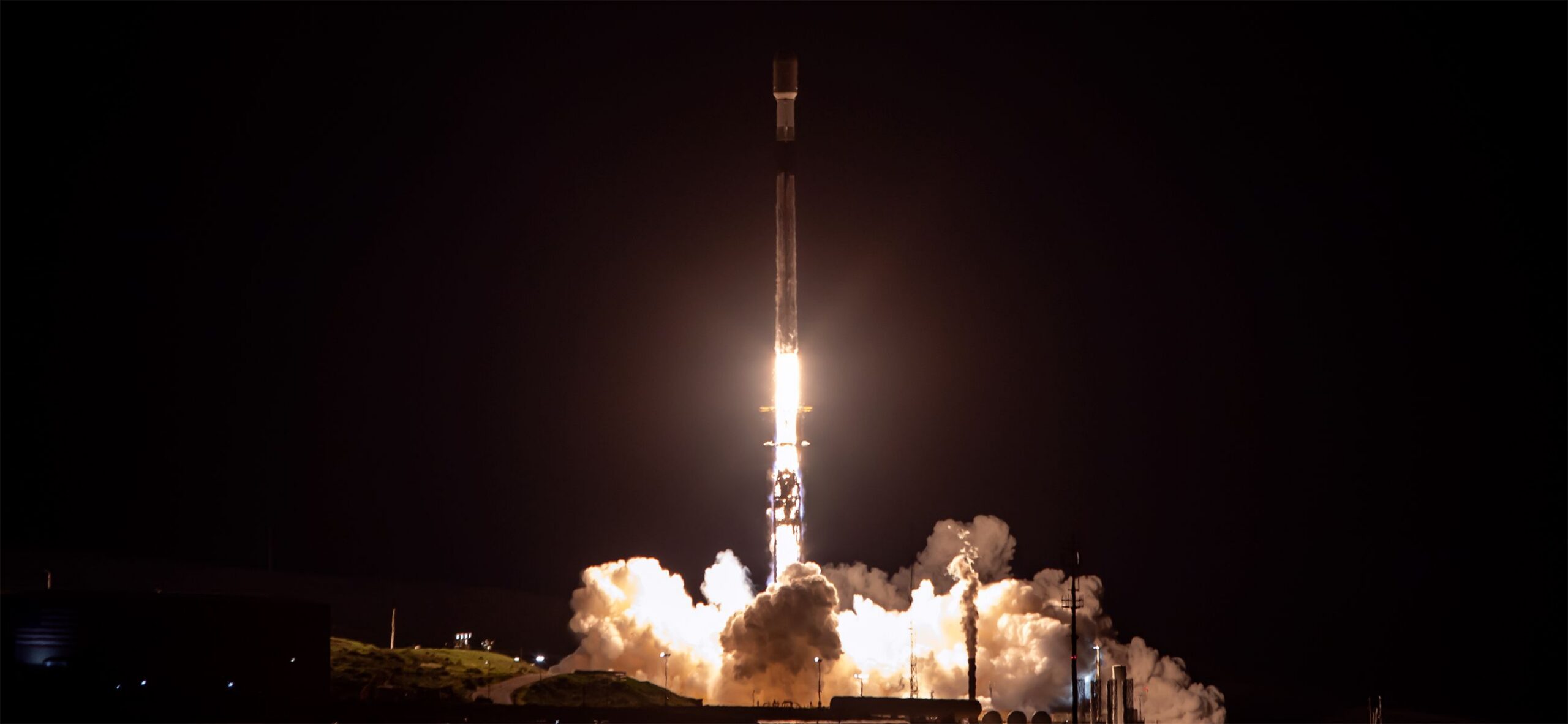
The HyMS in orbit demonstrator lifted off in January 2025. Credit: SpaceX
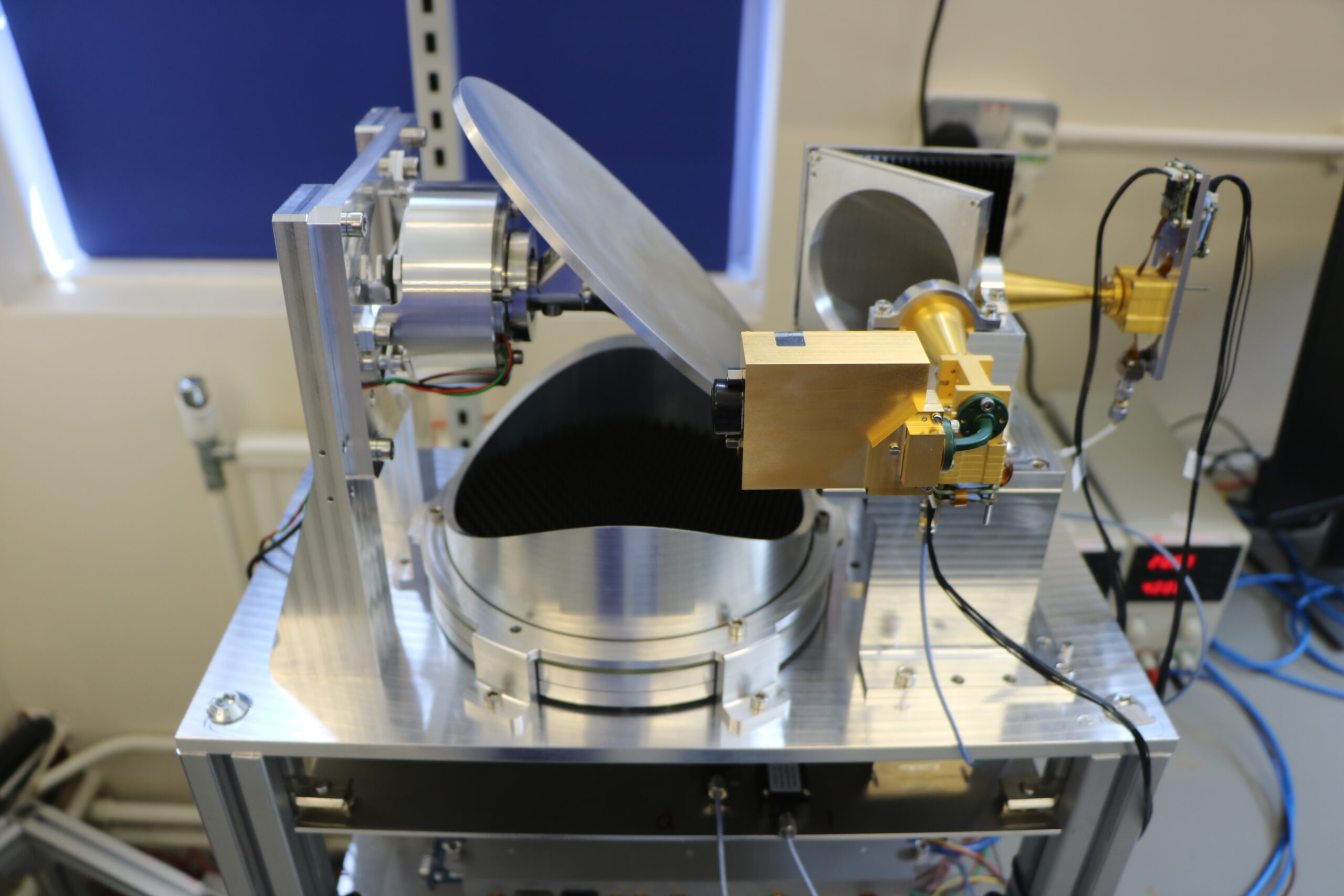
HyMS technology in the lab at RAL Space.
Approach
RAL Space and Spire Global developed the Hyperspectral Microwave Sounder (HyMS): a compact, shoebox-sized sensor that packs significantly higher frequency resolution than a conventional weather satellite into a far smaller and cheaper package. This opens the door to deploying multiple sensors in orbit, enabling much more frequent atmospheric sampling.
The technology began life as a concept within RAL Space’s Millimetre-Wave Technology Group, progressing from laboratory to airborne demonstrator with support from the STFC Innovations Team and the UK Space Agency’s Centre for Earth Observation Instrumentation. Spire Global then licensed the baseline technology from STFC, established a dedicated office at Harwell Campus, and led the engineering work to transform it into a space-qualified commercial product.
RAL Space provided the receivers, calibration target, and thermometry for the HyMS demonstrator, with Spire leading mission design, operations, and instrument control. The first HyMS in-orbit demonstrator launched in January 2026.
Benefits
HyMS will deliver improved vertical resolution of atmospheric temperature and humidity profiles, directly increasing the accuracy of numerical weather prediction, particularly over data-sparse regions like oceans and remote areas. Additionally, microwave sensors can penetrate cloud cover, making them among the most valuable inputs to global forecasting models.