The Hyperspectral Microwave Sounder (HyMS) in-orbit demonstrator lifted off from Vandenberg Space Force Base in California on 11th January 2025 aboard Space-X's Twilight mission. Building on technology from RAL Space’s Millimetre-Wave Technology Group, Spire led development to engineer the flight payload for HyMS, integrating it into a small satellite and developing the ground processing capability, representing a major breakthrough in more frequent and higher-resolution atmospheric monitoring.
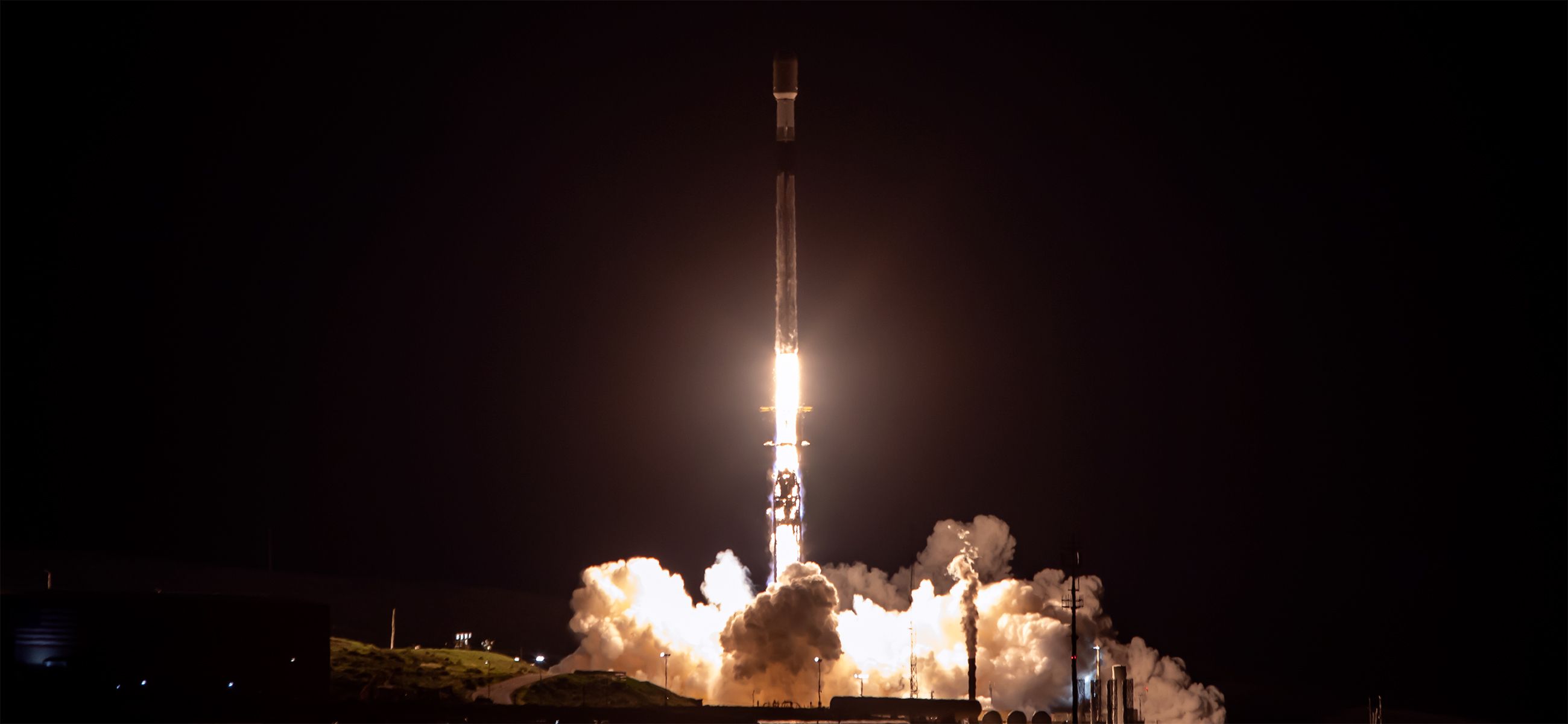
SpaceX's Twilight mission lifts off from Vandenberg Space Force Base. Credit: SpaceX
Transforming what’s possible in weather forecasting
Traditional meteorological satellites are very large and expensive to develop and launch. They typically revisit the same location once daily, limiting their ability to track fast-moving, high-impact, weather events such as tropical storms.
HyMS offers a much higher frequency resolution than a traditional weather satellite in a smaller package. Its compact design and lower cost opens the possibility of deploying multiple sensors, enabling far more frequent sampling of the atmosphere. In addition, the improved frequency performance of HyMS gives a much better vertical resolution of the atmospheric humidity and temperature profile. This more detailed data increases the accuracy of numerical weather prediction.
From laboratory to orbit
HyMS technology began as an idea within RAL Space that grew into a laboratory and then airborne demonstrator through support from the STFC Innovations Team and the UK Space Agency’s Centre for Earth Observation Instrumentation.
Following this early-stage development, Spire Global licensed the baseline technology from STFC and spearheaded the rigorous engineering required to transition the design into a space-qualified, commercial product.
Spire established a dedicated office at Harwell Campus to work alongside RAL Space and lead the technical evolution. RAL Space provided the receivers, calibration target and thermometry for the HyMS in-orbit demonstrator, while Spire led the mission design, operations, radiometric performance and calibration, and instrument control system. Spire and RAL Space are currently working together on the development of the first operational satellite.
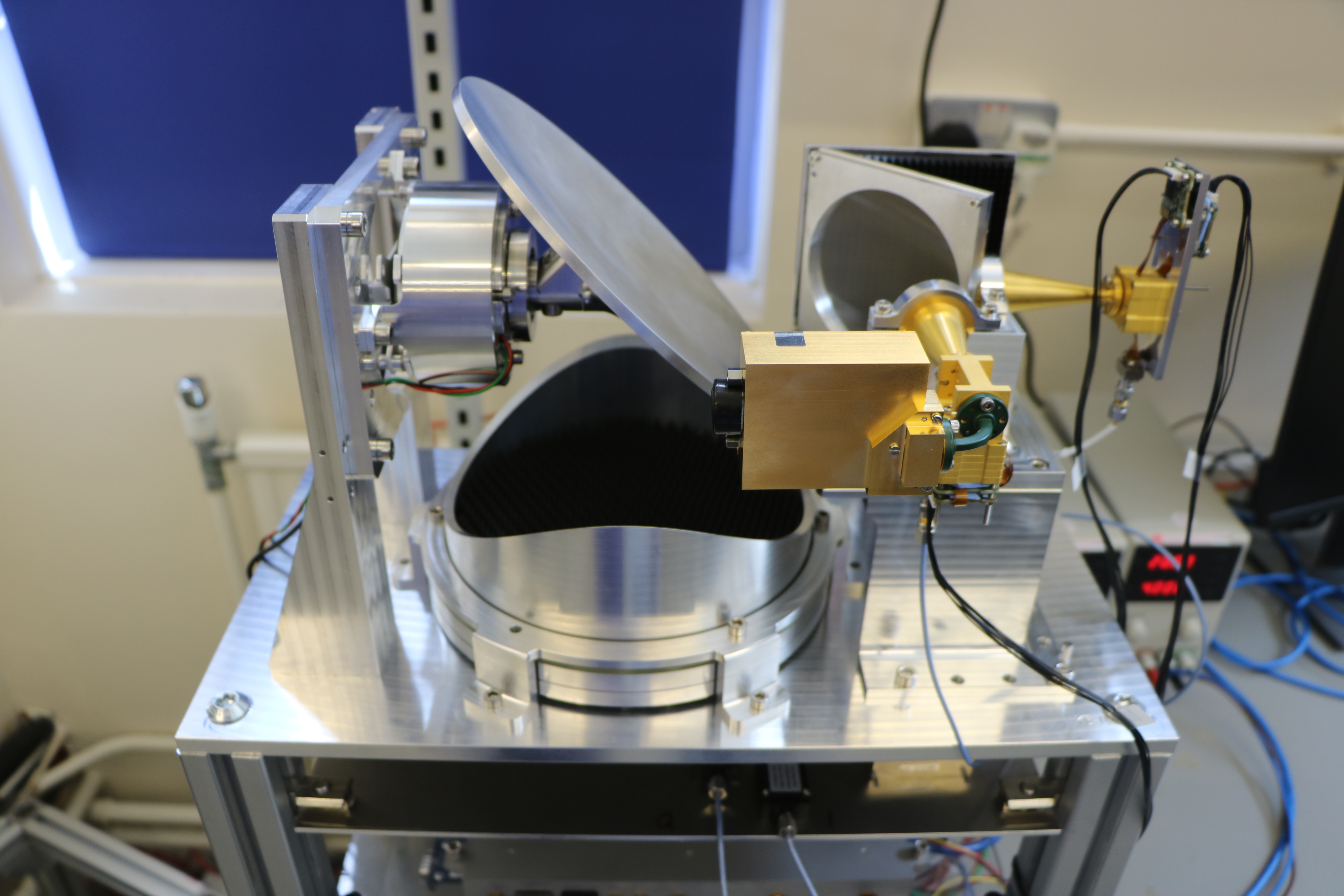
HyMS technology in the lab at RAL Space. Credit: STFC RAL Space
Global benefits ahead
This launch marks an important first step for HyMS and for expanding access to microwave sounding observations. These are among the most impactful satellite inputs to weather forecasting models worldwide, because microwaves can penetrate clouds and provide temperature and moisture profiles critical for accurate forecasting. Building on this in-orbit demonstrator, Spire plans to advance the HyMS capability across future satellites to expand the availability of these atmospheric measurements for meteorological agencies and governments worldwide.
By increasing observation frequency and improving vertical resolution, HyMS data can complement existing observing systems and contribute to improved numerical weather prediction, particularly over data-spare regions such as oceans and remote areas.
This milestone highlights a powerful collaboration: transferring RAL Space’s advanced research into a commercial solution that leverages Spire’s engineering expertise and leadership in the NewSpace sector.
Professor Peter Huggard, Millimetre Wave Technology Programme Leader at RAL Space, said:
“After years of development by teams at RAL Space and Spire, we’re tremendously proud to see the first HyMS in space. The receiver and calibration technology our team has provided will play a critical part in helping Spire Global deliver a step change in weather forecasting. This first demonstrator heralds the beginning on a new era, as when HyMS is deployed across multiple satellites, it will dramatically improve how we can track and predict the increasingly variable weather, with benefits for society and the economy.”
Theresa Condor, CEO of Spire Global, said:
“Microwave sounding is one of the most impactful satellite observations for weather forecasting models worldwide, alongside radio occultation profiles.
“This area represents a multi-billion-dollar global atmospheric sounding need, driven by the essential role these observations play in delivering accurate temperature and moisture profiles, particularly in cloudy conditions. With the successful launch of our Hyperspectral Microwave Sounder demonstrator, we are proud to strengthen our ability to support global forecasting agencies and further enable efficient and effective private sector participation in the global observing system.”